
Seasoned firewood has dried long enough for most of its internal moisture to evaporate, making it easy to light and hot-burning with less smoke. Whether you’re buying hardwood firewood or checking a stack you already own, moisture content is what matters: below 20% means the wood is ready to burn.
At Fairwood Firewood, we air-dry our hardwood for two years and test it with a moisture meter before delivery. This guide shows you how to check any pile and how to store it once it arrives.
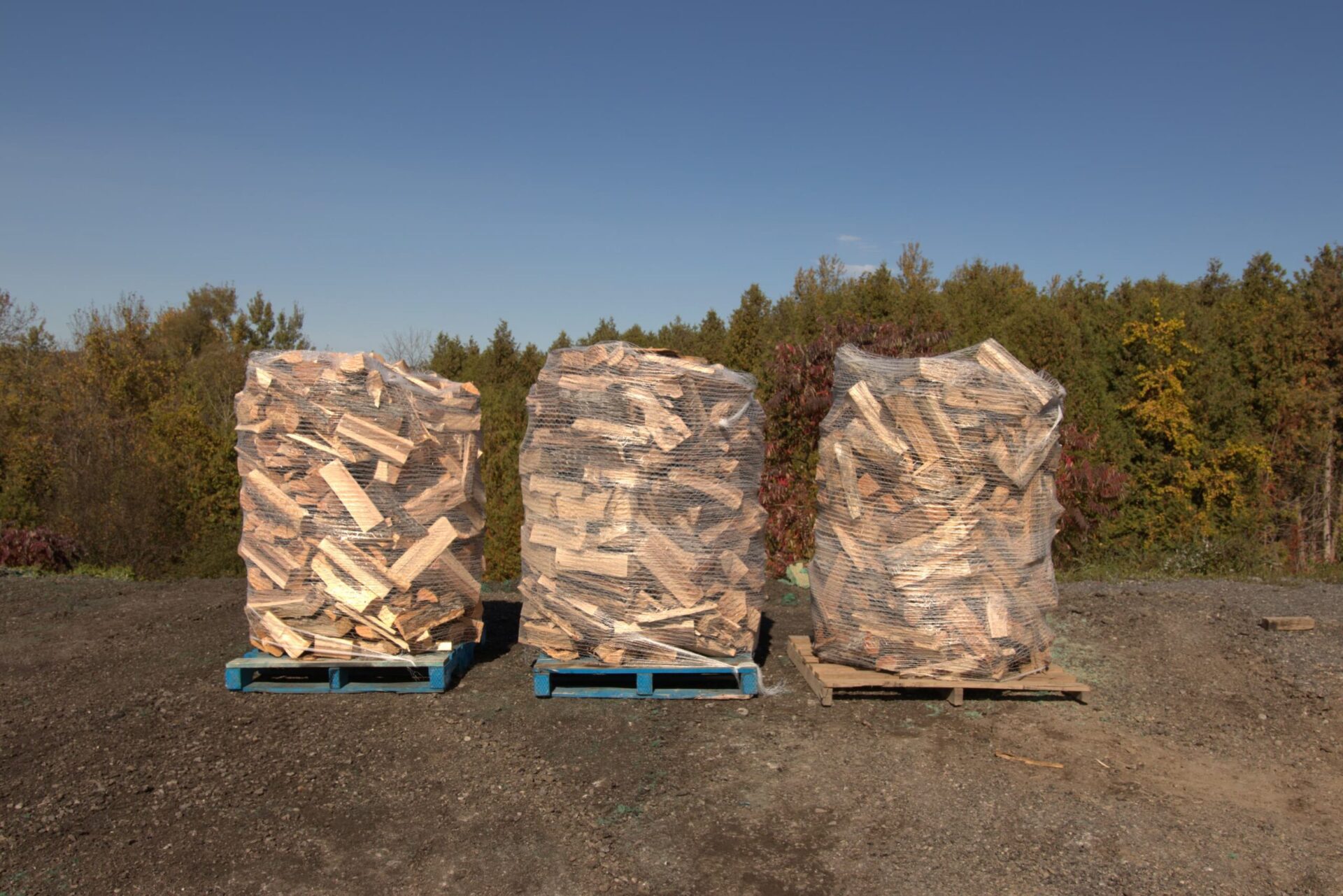
What Is Seasoned Firewood?
Fresh-cut wood contains a lot of moisture. Seasoning is the drying process that removes it. The wood is split, stacked off the ground, and left with air circulating around it until its moisture level drops. Health Canada recommends cutting, splitting, and stacking wood in a dry area at least 6 months before burning.
Seasoned wood lights faster, burns more steadily, and produces less smoke than wet wood. Seasoned hardwood firewood, like the maple, oak and birch we deliver, wastes less energy on boiling off water.
Why Firewood Needs to Be Seasoned Before Burning
Wet wood wastes energy. Much of the fire’s heat is used to turn water into steam, making the fire harder to light, cooler, and smokier. Burning wood that is too wet also leaves more creosote in your fireplace and chimney, which is why the Government of Ontario advises burning dry, well-seasoned wood in fireplaces and woodstoves. Health Canada lists wet wood among the things you should never burn.
Even dense hardwoods like oak and maple perform badly when wet. For more, read our guide to burning wet firewood.
What Moisture Content Should Seasoned Firewood Have?
Seasoned firewood should have a moisture content under 20%. We measure our hardwood in that range, between 15% and 20%, before it goes out for delivery. Moisture levels above that line matter because water in the wood has to burn off before the fire can heat your home, so wetter logs put out less usable heat for the same amount of wood. Wood sitting in the 20 to 30% range hasn’t reached the ideal moisture content for firewood yet; give it a few more months of covered, open-air storage and test it again.
Firewood Moisture Content Scale
30% and above = too wet
20 to 30% = still drying
15 to 20% = well seasoned, ready to burn
How to Tell If Firewood Is Seasoned
A moisture meter gives you the real answer. These signs help you tell if firewood is dry when you don’t have one handy.
Check with a Moisture Meter
Split a piece and test the freshly split inside, not the outside. Push the probes into the grain. Under 20% is ready to burn.
Look at the Bark and Colour
Seasoned wood usually looks duller and greyer than freshly cut wood. The bark is a useful second check too, since it loosens and starts to peel as the wood dries.
Check for Cracks
Cracks across the ends, called checking, appear as wood dries and shrinks. Smooth, uncracked ends usually mean the wood is still green.
Compare Weight
Seasoned pieces feel noticeably lighter than fresh-cut wood of the same species and size because much of the weight is water that has evaporated.
Listen to the Sound
Knock two pieces together. Dry, seasoned wood usually makes a clear, hollow sound. Wet or green wood gives a dull, flat thud instead.

How Long Does Firewood Take to Season?
Drying time depends on the species, piece thickness, airflow through the stack, sun, humidity, storage, and the time of year. Denser hardwoods like oak retain moisture longer and take longer to dry than lighter species. Splitting helps a lot, too, because it exposes more surface area, and wood with more exposed surface and less interior core dries noticeably faster than whole, unsplit logs.
Health Canada puts the minimum at about six months, and many hardwoods need a year or more. We let our hardwood dry on a skid for two years, so it dries evenly without mould or rot.
Seasoned Firewood vs Green Firewood
Green firewood is freshly cut and has not been dried. Seasoned firewood has been dried, and you’ll notice the difference the moment you light it. A pound of air-dried hardwood puts out roughly 45% more usable heat than the same pound fresh off the saw.
| Feature | Seasoned Firewood | Green Firewood |
|---|---|---|
| Moisture | Below 20% | 75% or more |
| Lighting | Easier | Harder |
| Heat output | About 7,100 Btu per pound | About 4,900 Btu per pound |
| Smoke | Typically less | Typically more |
| Storage need | Ready to use | Requires drying time |

How to Store Seasoned Firewood Properly
A few simple storage habits keep seasoned wood dry and ready to burn, no matter how long it sits outside.
- Keep the stack off the soil on a skid, pallets, bricks or boards.
- Cover only the top to keep off rain and snow.
- Leave the sides open so air can move through.
- Don’t wrap the whole stack in plastic. It traps moisture.
- Don’t pack the stack tight against exterior walls.
- Bring indoors only the small amount you plan to burn.
For stacking height and winter storage, see our guide to the best way to store firewood outside.
Buying Seasoned Firewood in Ontario
Before you buy firewood, ask if it’s hardwood or softwood, what the moisture content is, and how long the pieces are. Also ask if it is a face cord or full cord, if it arrives loose or on a skid, what the delivery costs are, and whether stacking is available. The Canadian Food Inspection Agency urges buyers to know where their firewood comes from, because moving it can spread invasive pests.
Fairwood Firewood sells seasoned mixed hardwood from Ontario forests in Muskoka and Bancroft, dried to 15-20% moisture content. Firewood delivery covers Toronto, the GTA, Southern Ontario, and Cottage Country on skids; the fee is shown at checkout.